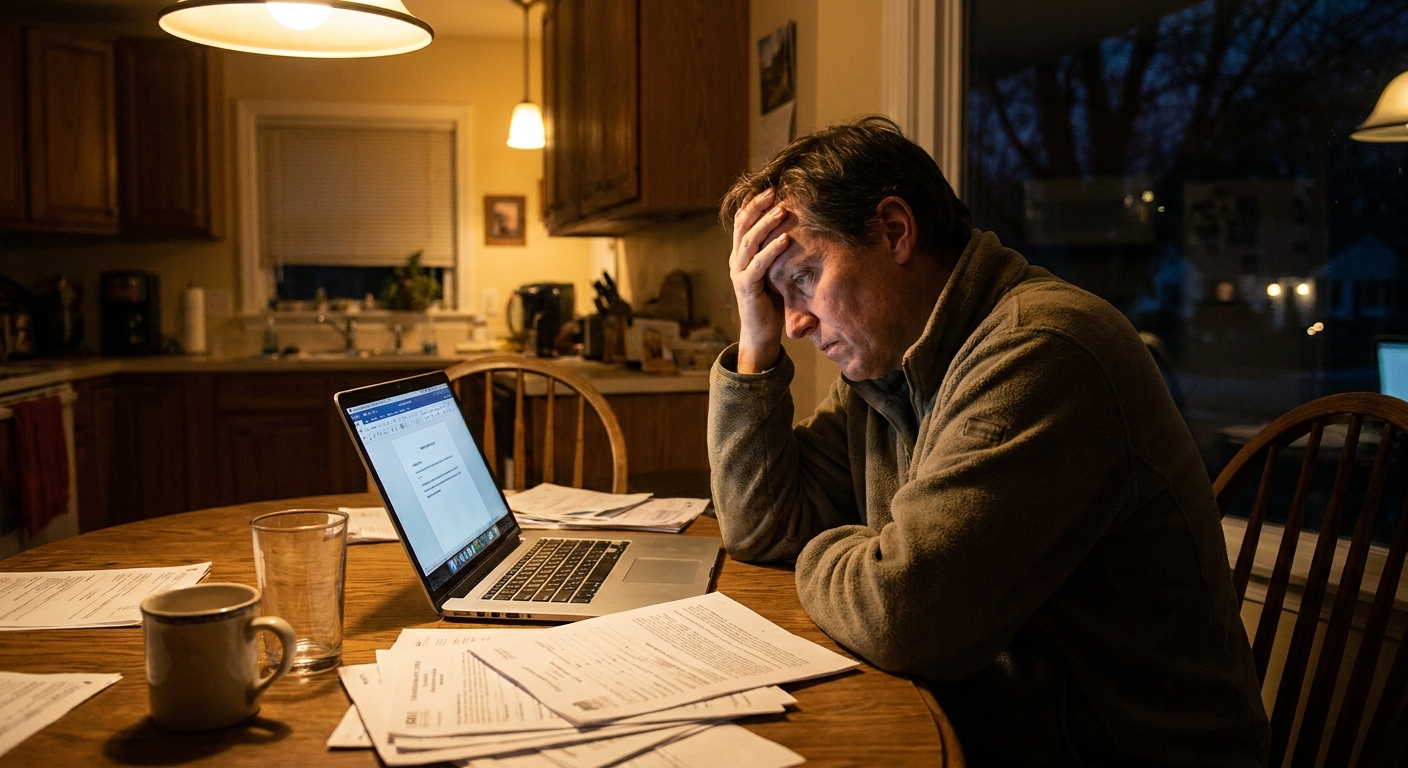
The paper from the courthouse says you need an alcohol and drug evaluation, and that is nearly all it says. It does not tell you how far ahead to book, what to bring, or how long the report takes to reach the judge. So you end up searching for the question almost everyone in your position asks: how long do DUI assessments take? The answer from Top of the World Ranch has two parts. The interview usually runs 60 to 90 minutes. The full process, from your first phone call to a signed report in front of the court or the Illinois Secretary of State, often takes 7 to 14 days. That gap decides whether you walk into your hearing prepared or empty-handed.
This guide covers each stage so you can plan backward from your deadline, arrive ready, and understand what happens to your answers after you leave. It comes from Top of the World Ranch, a holistic and evidence-based addiction treatment center in Milan, IL. Many people who sit through a DUI evaluation later want a clear, honest picture of what treatment could look like. Often a parent or spouse is the one reading alongside them. We wrote this to help with both questions.
Why Does the Interview Take About an Hour When the Whole Process Takes Two Weeks?
The face-to-face interview for an Illinois DUI evaluation usually lasts 60 to 90 minutes. The rest of the time goes to waiting for an open appointment, gathering your records, and giving the evaluator time to score your results and write a report the state will accept.
An alcohol and drug evaluation exists to answer one question for the court and the Secretary of State: what role, if any, alcohol or other drugs play in your life, and what level of education or treatment might help inform the court’s decisions about education or other steps. It is not a trial, and it is not a punishment. It is a structured clinical conversation that ends in a written recommendation. The Illinois Department of Human Services sets standards for this work under Title 77, Part 2060 of the Illinois Administrative Code, which governs licensed substance use programs in the state. Those standards explain why a quick chat is not enough. The evaluator has to cover your substance use history, your driving and legal history, your mental health, and your risk level. They also have to document all of it in a form that holds up on paper.
Here is why focusing only on session length causes trouble. Say you find out on a Monday that your hearing is the following Monday. You call a provider, hear “about an hour,” and relax. The earliest opening is Thursday. You finish the interview that afternoon, but the report still has to be scored, written, reviewed, and signed. That can take several business days, which puts it past your hearing date. The interview was short, but the timeline was not.
So when you call a provider, skip “How long is the appointment?” Instead, ask “If I come in this week, what day will my signed report be ready, and who will it go to?” That answer is the one that protects your court date.
How Long Do DUI Assessments Take From First Call to Finished Report?
Most people should plan on 7 to 14 days from the first phone call to a finished, signed report. The exact length depends on how soon you can get an appointment, whether you bring complete paperwork, and how long the provider needs to prepare the report.
Here is the full sequence most people go through during a drug and alcohol evaluation:
- First contact. You call or request an appointment, confirm the provider is approved for Illinois DUI evaluations, and ask about the fee and the report turnaround.
- Scheduling. You wait for an opening. This can be a few days or more than a week, depending on the provider.
- Gathering documents. You collect your ID, court paperwork, and any records the evaluator asks for.
- The interview. You meet with the evaluator for roughly 60 to 90 minutes.
- Scoring and report writing. The evaluator scores your screening tools and writes the report, which often takes 3 to 7 business days.
- Delivery. The signed report goes to you, your attorney, the court, or the Secretary of State, based on the releases you sign.
- Next steps. If the report includes recommendations, you can consider those options.
Each of these stages has its own small details, so it helps to look at them one at a time.
What Happens Before Your Appointment
The days before your interview often decide how long the whole process takes. When you first call, the provider usually asks why you need the evaluation, whether a court or the Secretary of State ordered it, and when your deadline is. Give your exact hearing date on that first call. A provider who knows your deadline can tell you right away whether the timing works or whether you need to look for an earlier opening somewhere else.
You may also get intake forms to fill out ahead of time. Completing them at home, without someone waiting on you, saves time and helps you give careful answers. Use this window to collect your documents, which a later section covers in detail.
What Happens During the 60 to 90 Minute Session
The session starts with paperwork: consent forms, release forms, and a check of your ID. Then the evaluator moves into a structured interview. Expect questions about your drinking and drug use over time, the details of your arrest, your driving record, any past treatment, your mental health, and your family background. You will also complete at least one standardized questionnaire, which gives the evaluator an objective score to compare against what you said in the interview.
The questions can feel personal, and that is normal. The evaluator is not trying to trap you. Their job is to build an accurate picture so the recommendation fits your real situation. Honest, complete answers usually make the session go more smoothly than guarded ones, because the evaluator does not have to keep circling back to fill in gaps.
What Happens After You Leave
Walking out the door does not mean the report is done. The evaluator still has to score your screening results, compare them with your records, write a narrative summary, assign a risk level, and sign the final report. In many programs that takes 3 to 7 business days. Before you leave, ask for a specific date the report will be ready and how it will be delivered, so you are not guessing during the wait.
Missing Paperwork Is the Easiest Way to Lose a Week
Of everything that can slow the process down, missing documents are the most common and the easiest to prevent. If you show up without what the evaluator needs, the report often cannot be finished. You may have to send records later or come back for a second visit, and either one can add a week to your timeline. The simplest way to protect your court date is to arrive with everything in hand.
Most Illinois DUI evaluators ask you to bring:
- A valid driver’s license or state ID
- Your court or legal paperwork for the DUI charge, such as the citation, charging documents, court order, and hearing date
- Your blood or breath alcohol test results, if you have them
- A copy of your Illinois driving record, if the evaluator requests it
- Proof of insurance, if you plan to use it
- Records from any prior substance use treatment, if you have received it
Each item has a purpose. Your ID confirms that the report belongs to you, which matters when it reaches a judge or a hearing officer. Your court paperwork shows the evaluator exactly what you were charged with and when, which shapes how your case is classified. Your alcohol test result is one of the important numbers in the evaluation. A blood alcohol test measures the amount of alcohol in your blood, and evaluators compare that number with what you report about your drinking that night. Your driving record shows any earlier offenses that change your risk level.
Prior treatment records carry weight too. If you have been in a program before, the evaluator needs to know what kind of care you received and how it went. Leaving that history out does not make it disappear. It usually comes up later and slows everything down. If you cannot get a document in time, call the provider before your appointment and ask what they need. A two-minute call can save you a second trip.
How Long Is a DUI Evaluation Good for in Illinois?
Many Illinois providers treat a DUI evaluation as current for about 90 days from the date it is completed. The judge or Secretary of State hearing officer on your case makes the final call on what counts as current, so confirm the window that applies to you before you book.
The validity window matters because you can schedule too early as well as too late. If you finish your evaluation months before your hearing, the report may be considered out of date by the time you get there. You could then be asked for an updated or brand-new evaluation, which usually means paying again and sitting through another interview. Some reviewers will accept an older evaluation with an update, but you should not count on that without asking.
The flip side is the deadline rush. If you wait until the week of your hearing, the 7 to 14 day timeline can work against you, and you may need to request a continuance or delay your license reinstatement. Neither outcome is what you want after everything you have already been through.
A practical plan is to book your evaluation about 3 to 6 weeks before your court date or Secretary of State hearing. That gives you room for scheduling delays, a missing document, and a full report preparation window, and it keeps the report well inside a 90-day window. If your hearing gets moved, call your evaluator and your attorney right away. Ask whether the report you already have will still be accepted on the new date or whether you should plan for an update.
A Treatment Recommendation Does Not Have to Mean a Cold, Clinical Building
Timing and paperwork are only part of the worry. For many people, the bigger fear is what the report might say. If your evaluation includes treatment suggestions, you have a say in where that care happens, and the setting you choose can make it easier to be honest, stay engaged, and consider the options available to you.
Many people dread this part. You picture a crowded waiting room, a stranger behind a desk, and a program that sees you as a case number. That fear is understandable, especially if you have tried treatment before and it did not stick. If you are reading this for a son, a daughter, or a spouse, you may be carrying a different fear: that you will send someone you love somewhere that does not truly see them. The National Institute on Drug Abuse describes addiction as a treatable condition and notes that no single treatment is right for everyone. Treatment works differently for each person, and the place it happens is part of that fit.
Top of the World Ranch is a residential treatment ranch in Milan, IL 61264, built around a natural, inspired setting that supports healing. Care blends holistic and evidence-based treatment with nature-based and experiential healing, and individualized care planning means every plan is tailored to the person in front of us, not a template. The ranch offers care for people working through addiction and substance use disorders along with dual diagnosis and co-occurring mental health conditions, with mental health support built into the same plan. If anxiety, depression, or trauma sits underneath the drinking or drug use, it gets addressed together instead of being sent somewhere else. Because the ranch offers detox and withdrawal management, residential treatment, partial hospitalization (PHP), and intensive outpatient (IOP), a person can step down within Top of the World Ranch as they progress without starting over at a new program.
Cost is often the next worry, and it is a fair one. Top of the World Ranch works with Aetna, Blue Cross Blue Shield, Cigna, Health Partners, Humana, and UnitedHealthcare to verify your benefits and help you understand what your plan may cover. Working with a carrier does not guarantee coverage or reimbursement, and out-of-pocket costs vary by plan, so the admissions team will check your specific benefits before you make any decision. If you want to learn more about how residential care works here at Top of the World Ranch, you can read about our drug and alcohol rehab center and what natural healing looks like day to day in our ranch setting.
What Happens to Your Answers After You Walk Out the Door?
Whatever comes next, it starts with the report itself. After your session, the evaluator scores your screening tools, reviews your records, writes a narrative summary, assigns a risk level, and prepares the signed report for delivery. In many programs this takes 3 to 7 business days, and calling every day will not make it go faster.
The scoring step usually relies on a standardized tool such as the AUDIT (Alcohol Use Disorders Identification Test) or the SASSI (Substance Abuse Subtle Screening Inventory). These instruments help the evaluator look past a single bad night and see patterns. The evaluator then compares your score with your alcohol test result, your driving record, and what you said in the interview. When those pieces line up, the report comes together quickly. When they conflict, the evaluator may need more time or more information from you.
Next comes the risk classification. Illinois sorts people into four levels: Minimal Risk, Moderate Risk, Significant Risk, and High Risk. Your level determines what the report may suggest, which might be a DUI risk education course, early intervention, outpatient treatment, or a more intensive level of care. The evaluator writes a narrative explaining how they reached that conclusion, signs the report, and releases it according to the consent forms you signed. Federal privacy rules protect substance use records, so the report goes only where you have authorized it to go, whether that is you, your attorney, the court, or the Secretary of State.
Waiting is hard, especially with a court date ahead. Calling every morning will not speed up scoring or report writing, and it can add to your own stress. The better move is to ask two things before you leave your appointment: the date your report will be ready and how it will be delivered. Write both down. If that date passes, one calm follow-up call is enough.
What Else Should You Know Before You Book?
Once people know how long DUI assessments take, a handful of follow-up questions usually come next. Each answer below starts with the short version.
How long does a DUI assessment take?
The interview itself usually takes 60 to 90 minutes, and the full process usually takes 7 to 14 days. That longer window covers scheduling, gathering documents, and the 3 to 7 business days many evaluators need to score your results and sign the report. Plan around the full timeline, not just the appointment.
Can I do a drug and alcohol evaluation online in Illinois?
Sometimes. Some Illinois courts and Secretary of State hearing officers accept evaluations done by video, but not every case allows it. Before you book a telehealth appointment, ask your attorney or the court clerk whether a remote evaluation will be accepted in your case, and ask the provider whether they are approved to do DUI evaluations by video. Get both answers before you pay.
How much does a DUI evaluation cost in Illinois?
Published fees for a standard Illinois DUI evaluation often fall around $150 to $200. Ask any provider for the full price in writing and confirm what it includes: the interview, the screening tools, the written report, and delivery to the court. Some providers charge extra for rush reports or updates. Insurance may not cover a court-ordered evaluation, so ask before your appointment.
What questions will the evaluator ask during my DUI assessment?
Expect questions in a few main areas: your history of alcohol and drug use, the details of your arrest, your driving and legal history, your mental health, your family history with substances, and any past treatment. The wording varies by evaluator. You will also fill out at least one standardized questionnaire. No single answer decides the outcome. What matters is the overall picture.
What is the difference between a screening, an assessment, and an evaluation?
People use these words as if they mean the same thing, but they usually do not. A screening is a short check, often around 15 minutes, that flags whether a deeper look is needed. A clinical assessment is a fuller review used to plan treatment and may take more than one session. A court-ordered DUI evaluation is usually a single session of 60 to 90 minutes that ends in a formal report and risk classification for the court or the Secretary of State. If a court ordered you to get one, make sure you book an evaluation, not just a screening.
Will my evaluation recommend treatment, and how does that affect my license reinstatement?
What appears in your evaluation depends on your history, your records, and how honestly you answer. Based on your risk level, Illinois evaluations may include a range of suggestions from a DUI risk education course to more intensive treatment options. For a Secretary of State hearing, you will usually need proof that you completed what your evaluation suggested before reinstatement moves forward. Following through on any recommendations promptly is one of the clearest ways to keep that timeline on track.
How do I verify that an evaluation provider is approved by Illinois DHS?
Ask the provider directly whether they are licensed by the Illinois Department of Human Services to perform DUI evaluations, and ask for their license number. You can confirm it with the Illinois DHS Division of Substance Use Prevention and Recovery, which oversees licensed substance use programs in the state. Your attorney can also tell you which providers courts in your area routinely accept. An evaluation from an unapproved provider may not be accepted, which would cost you both money and time.
Your Next Step Is One Phone Call, Made Early
The way to protect your court date is to book your evaluation about 3 to 6 weeks ahead and ask three questions on the first call: Are you approved by Illinois DHS for DUI evaluations? What is the full fee? What date will my signed report be ready? Those three answers tell you more about how long DUI assessments take in your case than “about an hour” ever will.
If you are also thinking about what comes after the evaluation, especially if treatment might be among the suggestions in your report, call Top of the World Ranch in Milan, IL, at (844) 814-8885. That goes for you and for anyone helping you through this. Our admissions team can walk you through your timeline, check your benefits with BCBS, Cigna, Aetna, UHC, Health Partners, or Humana, and explain what individualized care in our natural, inspired ranch setting would look like. You do not have to decide anything on that call. The real goal is simple: to trade the 2 a.m. guessing for a clear picture of your options, so the weeks ahead feel manageable and hopeful instead of frightening.
Take the Next Step Toward Meeting Your Requirements
If you’re facing a DUI assessment deadline in Milan, IL, understanding the timeline is just the first part of the process. Top of the World Ranch is here to walk you through both the evaluation and any recommended treatment that follows, with staff who understand what you’re going through. Reach out today to schedule your assessment and get clear answers about what comes next.
- This article is general information, not legal or medical advice.
- Evaluation requirements, validity periods, and accepted formats vary by court and case, and every evaluation depends on your individual history and disclosure.
- Outcomes vary from person to person.
- Confirm the requirements for your case with your attorney or the court.